ONDC vs Zomato: The Real Unit Economics of Food Delivery in 2026
Zomato and Swiggy are charging restaurants 30% commissions and users ₹15 platform fees plus GST on delivery. We dive into the math of why the government backed ONDC platform might finally break the duopoly.
Key Definitions
Key Takeaways
- The Zomato and Swiggy duopoly now charges restaurants brutal commission rates ranging from 25% to 35% per order. This forces restaurants to artificially inflate their online menu prices by 30% just to survive.
- The Open Network for Digital Commerce (ONDC) caps restaurant commissions at roughly 8% to 10%. By returning margins to the restaurant, ONDC allows them to offer the exact same food at a significantly lower baseline price.
- In 2025, delivery charges became subject to an 18% GST levy. Combined with aggressive ₹15 platform fees, the base cost of ordering from Swiggy and Zomato has fundamentally increased regardless of food price.
- While ONDC initially subsidized delivery heavily (up to ₹75 to ₹100 off), they are now shifting to a sustainable model where consumers pay the true cost of logistics (via Dunzo or Shadowfax). ONDC is cheaper on high value family orders but can be more expensive for single item budget meals.
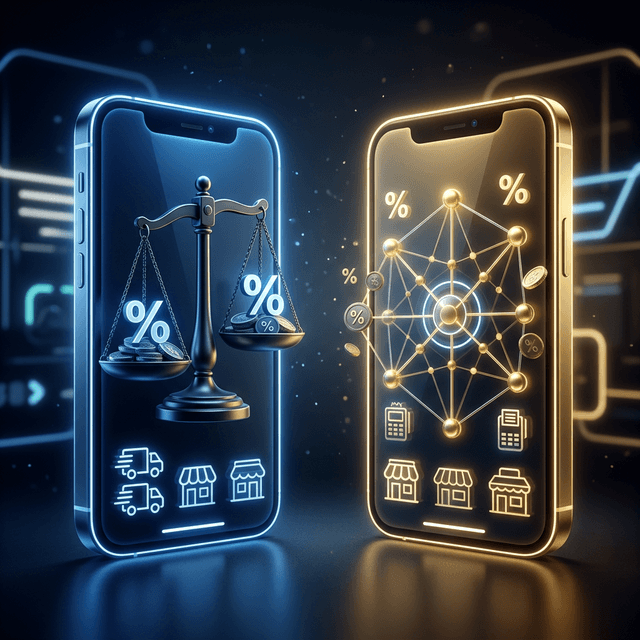
The Death of Cheap Delivery
If you have ordered food online in 2026, you have felt the sting. The era of venture capital subsidizing your late night cravings is officially dead.
The Zomato and Swiggy duopoly now controls the Indian food delivery market with an iron grip. Having aggressively eliminated the competition and established user dependency, they have flipped the switch from 'Growth at all costs' to 'Ruthless Profitability'.
The consumer is paying the price. A ₹250 meal at your local restaurant now routinely costs ₹380 to get delivered to your door.
Enter ONDC, the Open Network for Digital Commerce. Backed by the Indian Government, ONDC promises to shatter this duopoly by democratizing the technology. But promises do not deliver biryani.
Let us break down the brutal unit economics of food delivery in India and see if the math actually supports a victory for ONDC.
The Economics of Extraction (Zomato & Swiggy)
To understand why your food is so expensive, you must follow the money in a standard aggregator transaction. The Zomato/Swiggy model extracts cash from three distinct pillars on every single order.
1. The Restaurant Squeeze (30% Commission)
The aggregators charge restaurants severe commission rates, often ranging from 25% to 35% of the total order value.
The restaurant industry is notoriously brutal, operating on massive overheads (rent, staff, ingredients) and thin net profit margins of 10% to 15%. If a restaurant sells a pizza for ₹400 and Zomato takes ₹120 (30%), the restaurant instantly loses money on the transaction.
To survive this commission, restaurants implement a controversial but necessary tactic: Dual Pricing. They artificially inflate their online menu prices by 25% to 30% specifically to cover the aggregator fee. When you use Zomato, you are paying a hidden premium on the food itself before delivery fees are even applied.
2. The Customer Surcharge (Platform Fees & GST)
Not content with 30% of the food value, the aggregators have introduced direct consumer levies.
- •The Platform Fee: During peak hours or festive seasons, Zomato and Swiggy now extract a non negotiable ₹12 to ₹15 platform fee simply for opening the app.
- •The GST Blow: Recent tax rulings mandate an 18% GST directly on delivery charges.
You are now paying an inflated food price, a delivery fee, an 18% tax on the delivery fee, and a platform fee. This compounding math destroys the viability of ordering cheap meals.
The Promise of the Open Network (ONDC)
ONDC fundamentally alters the architecture of the transaction. It is not an app like Swiggy. It is a backend protocol, similar to UPI.
ONDC connects a Buyer App (like Paytm, Magicpin, or Ola) directly to a Seller (the restaurant) and automatically calls a Logistics Partner (like Shadowfax or Dunzo) to execute the delivery. It removes the central corporate middleman.
The 8% Commission Reality
The core economic advantage of ONDC is the commission structure. Because ONDC is a decentralized network and not a profit hungry corporation, the total commissions charged to the restaurant drop from 30% down to roughly 8% to 10%.
This 20% margin difference is massive. It allows the restaurant to list their food at the exact same price as their physical dine in menu without taking a loss.
If you order a ₹1000 family dinner, avoiding a 30% menu inflation instantly saves you ₹300 on the base cost of the food alone.
The Logistics Problem
However, the ONDC model hits a brutal mathematical roadblock when it comes to the last mile delivery rider.
In the Zomato model, the company cross subsidizes the delivery cost using the massive 30% restaurant commission. Zomato might charge you ₹40 for delivery, pay the rider ₹70, and absorb the ₹30 loss using the restaurant's money.
Because ONDC only charges 8% commission, there is zero money available to subsidize the delivery rider. On ONDC, the consumer must pay the true fundamental cost of the logistics. If Shadowfax demands ₹90 to drive 6 kilometers through Bangalore traffic, you pay exactly ₹90.
Conclusion: Who Wins in 2026?
The mathematical verdict on ONDC vs Zomato depends entirely on your cart value.
When ONDC Wins (High Value Orders): If you are ordering a ₹1,500 dinner for four people, ONDC is mathematically superior. Avoiding the 30% menu price inflation will save you ₹450 on the food. Even if you have to pay a brutal, unsubsidized ₹120 delivery fee to the logistics partner, you are still ahead by ₹330. ONDC dominates for group meals and expensive restaurants.
When Zomato/Swiggy Wins (Budget Meals): If you are a student ordering a single ₹180 roll, Zomato wins. The 30% menu inflation only adds ₹54 to your bill. Because Zomato aggressively subsidizes the delivery (or you hold a Zomato Gold membership), the low delivery cost wipes out ONDC's advantage. Paying a ₹90 real world ONDC delivery fee on a ₹180 roll is mathematical absurdity.
The great Indian food delivery war is no longer about who has the best app. It is a pure math equation based on cart size and the true cost of human logistics.
Frequently Asked Questions
Sources & References
Tags
Written by Amodh Shetty
Amodh is a personal finance educator and the founder of KnowYourFinance. With a deep understanding of Indian taxation and investment products, he simplifies complex financial concepts to help young Indians build wealth safely.
Editorial Disclosure: The author holds investments in broad-market index funds and SGBs. This article is strictly for educational purposes and does not constitute professional investment advice. KnowYourFinance maintains complete editorial independence.
Ready to Put This Knowledge into Action?
Download KnowYourFinance app and access 25+ calculators, enhanced planners, and personalized insights to implement what you've learned.
Download Free AppRelated Articles
Continue your financial education with these related guides