The Frictionless Debt Machine
You are casually lying on your couch at 11:30 PM, scrolling through Zomato or Swiggy. You decide to order a ₹500 pizza. You reach the checkout page.
Instead of typing out a UPI sequence or reaching for your wallet to grab a credit card CVV, a brightly colored, frictionless button demands your attention: Pay Later. One single tap, no OTP required, and the food is instantly on its way. You will simply settle the ₹500 bill at the end of the month.
It feels entirely modern. It feels like the ultimate checkout convenience.
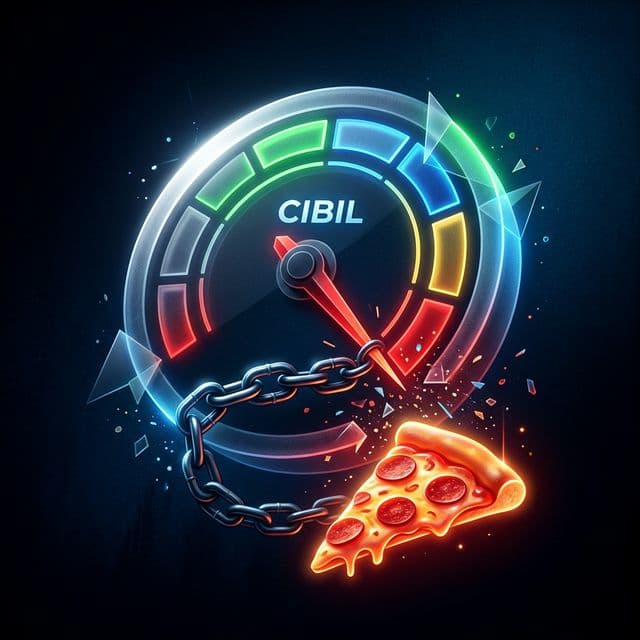
But behind the slick user interface, a brutal, mathematical financial process has just occurred. You did not just defer a payment. You legally applied for, and were instantly granted, a high-rate, unsecured personal loan.
The "Buy Now, Pay Later" (BNPL) industry has completely gamified debt for GenZ and Millennials. But as the RBI's aggressive 2025-2026 crackdown reveals, these algorithms are quietly devastating the very foundation of your financial identity: your CIBIL score.
Here is the exact mathematical reality of why a ₹500 pizza loan can permanently ruin your chances of securing a massive, critical home loan five years from now.
1. The Algorithm Hates "New" Credit
Your CIBIL score is not a magical number; it is a cold, mechanical algorithm built on five distinct pillars. One of the most critical variables is the Average Age of Credit History, which accounts for roughly 15% of your total score.
The algorithm trusts stability. If you have a single credit card that you have used diligently for six years, the algorithm mathematically concludes you are a highly responsible, ultra-low-risk borrower.
BNPL shatters this stability.
Every time you activate a Simpl, LazyPay, or Amazon Pay Later facility, the backend NBFC (Non-Banking Financial Company) legally opens a brand new loan account under your PAN card.
If your 6-year-old credit card is suddenly joined by five brand new BNPL micro-loans, the mathematical average age of your credit instantly crashes from 72 months down to barely 12 months.
The algorithm registers this massive drop in established history and instantly violently adjusts your score downward. You are actively penalized for adding "young" debt to your profile.
2. The Poisonous "Unsecured Loan" Mix
The second pillar of the CIBIL algorithm is the Credit Mix. Banks strongly prefer borrowers who demonstrate the ability to handle both Secured Loans (like a Car or Home loan) and Unsecured Loans (like Credit Cards).
BNPL strictly categorizes as the most highly toxic tier of Unsecured Personal Loans.
When you apply for a ₹1 Crore Home Loan at the age of 30, the underwriter at HDFC or SBI will manually pull your exhaustive CIBIL report.
If they see a clean history of one credit card and an ongoing auto loan, you are approved instantly at the lowest floating interest rate.
But if they open your file and see 14 active "Unsecured Personal Loans" issued by random NBFCs—all hovering between ₹2,000 and ₹15,000—the banking system flags you as a hyper-risky borrower. The underwriter does not know you bought a smartwatch or a pizza; the computer simply tells them you are chronically dependent on high-interest micro-debt to survive the month.
Your home loan is either entirely rejected, or you are hit with a heavy "risk premium" interest rate that costs you ₹15 Lakhs extra over a 20-year tenure.
3. The RBI Crackdown and Hard Defualts
Prior to 2024, many BNPL platforms operated in a regulatory gray area, functioning more like digital ledgers than strict banks.
This era is permanently dead. Under the aggressive RBI Digital Lending Guidelines enforced through 2025 and 2026, the central bank mandated that all BNPL platforms must strictly classify as highly regulated lending products.
This means absolute, unforgiving transparency.
If you miss a ₹300 BNPL payment deadline because you changed your phone number or simply forgot, the platform cannot just send you an angry SMS. They are legally mandated to hard-report that delinquency directly to CIBIL.
A single "Late Payment" marker on your credit report for a trivial food delivery can instantly tank your score by 40 to 60 points. That permanently visible black mark remains on your financial record for 36 solid months.
The Verdict: Cut the Chains
BNPL platforms are brilliantly designed to decouple the psychological pain of spending from the act of purchasing. They want you focused on the dopamine hit of the new sneakers, not the debt contract you just signed.
The only safe strategy for building a bulletproof credit profile is intense consolidation.
Delete the BNPL apps. Maintain exactly one or two primary credit cards with established, aged histories. Pay the total due exactly three days before the deadline, and never revolve the balance.
A strong CIBIL score is your absolute most valuable financial asset when the stakes are massive—like securing a home for your family. Do not let an algorithm destroy that asset in exchange for delaying the payment on a late-night biryani.
Frequently Asked Questions
Does simply activating BNPL drop my score?+
If I pay my BNPL bill exactly on time, doesn't it help my score?+
Why did the RBI crack down on these apps in 2025?+
Sources & References
Disclosure & Update History
This content is for educational purposes only and is not personalized financial, tax, or legal advice.
Update history
- Originally published on 24 March 2026.
- Latest editorial review completed on 24 March 2026.
- Sources cited on this page are reviewed during each editorial refresh.
Tags
Written by Amodh Shetty
Amodh is a personal finance educator and the founder of KnowYourFinance. He focuses on Indian taxation, investing, insurance, and household decision-making frameworks.
Editorial disclosure: The author holds investments in broad-market index funds and SGBs. This article is strictly for educational purposes and does not constitute professional investment advice.
Need Calculators Alongside the Guide?
The article stands on its own. If you want an iPhone companion for running scenarios, saving inputs, and using India-focused calculators, you can use the KnowYourFinance app.
Explore the iPhone App